

 Jul 11 2022
 9 min read
In an era where automation is redefining the meaning of “manual,” computers are continuously evolving to perform tasks once thought to be exclusive to human expertise. Among these advancements, machine learning algorithms, such as the Naive Bayes Algorithm, have emerged as indispensable tools in various domains, from healthcare to natural language processing.
The Naive Bayes Algorithm is a classification method firmly nestled within the realm of supervised machine learning. It is founded upon the Bayes Theorem and is rooted in the assumption of predictor independence. This algorithm operates under the premise that the presence of one feature in a class is unrelated to the presence of any other feature. Its simplicity is both a virtue and a strength, as it often outperforms more complex classification techniques, mainly when dealing with vast datasets.
This classification method calculates posterior probabilities using the following equation:
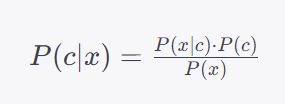
Within the Scikit-Learn library, three distinct Naive Bayes models are available:
The versatility of the Naive Bayes Algorithm extends to various applications, including:
Advantages:
Disadvantages:
In conclusion, the Naive Bayes Algorithm stands as a powerful tool in the machine learning arsenal, offering simplicity and efficiency. While it excels in numerous applications, it’s essential to be aware of its underlying assumptions and limitations to harness its full potential.
Rang Technologies, based in New Jersey, has dedicated over a decade to delivering innovative staffing solutions and the best talent to help businesses of all sizes unlock the full potential of the latest technologies and build high-performing teams to achieve their digital transformation goals.